


Catalogue – Basquiat
Choose options
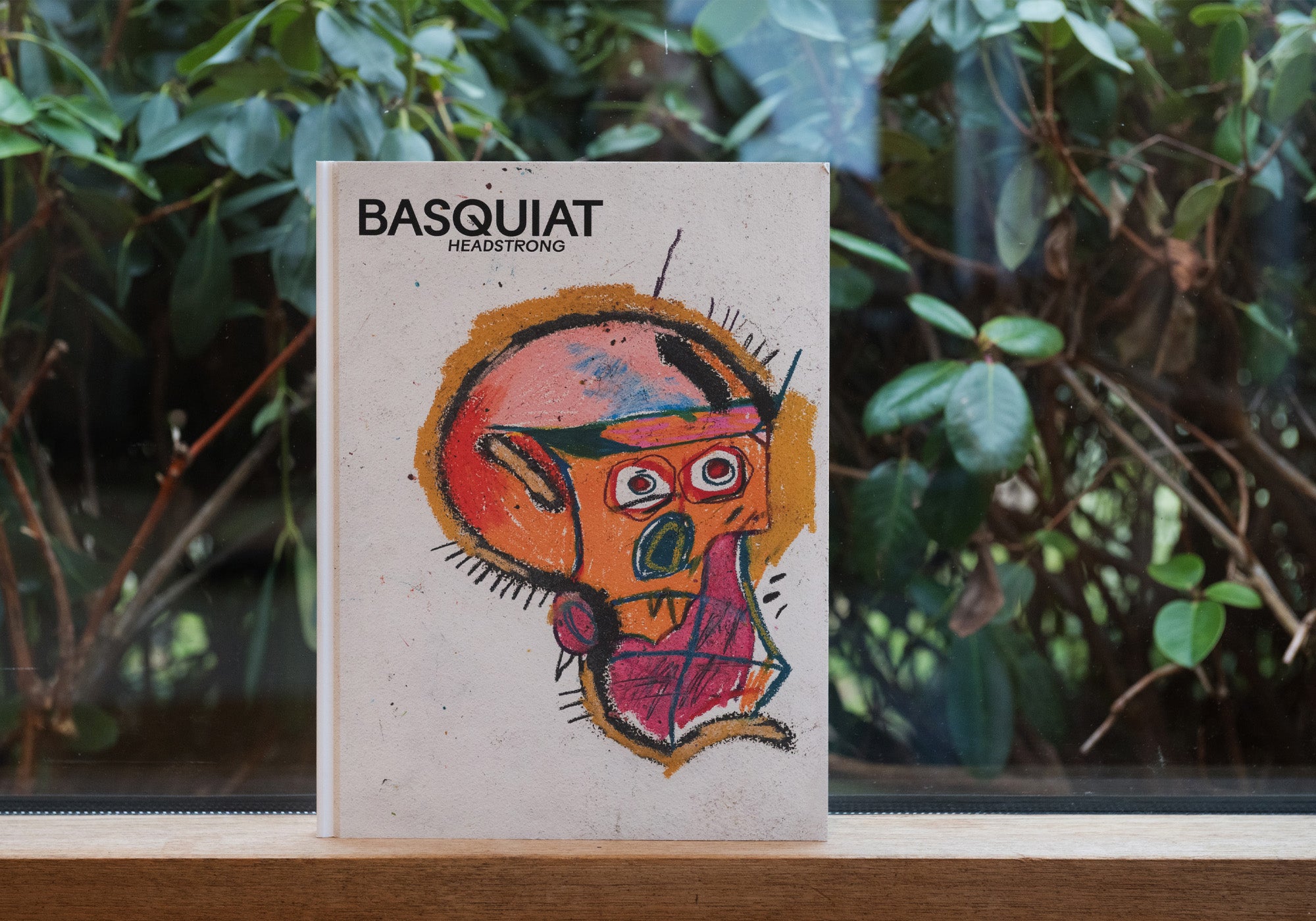
The exhibition is set to be the first comprehensive showing devoted to the artist's depictions of the human head, including many works that the artist chose to keep to himself during his lifetime.
Occupying a position as an icon, myth and outright brand, Basquiat long ago burst out of the narrow confines of art history to become a ubiquitous global phenomenon: a young Black artist who broke through in a blitz of heads, bodies and potent symbols, only to vanish again at the age of 27. Since then, the mythology surrounding his life and work has only grown stronger; today it lives a life of its own in popular culture.
Amidst Basquiat’s explosive, expressive output, there is also a group of works – drawings in oilstick on paper, mainly from the period 1981-1983 – which revolve around the head as a motif and which are almost devoid of the symbols and text that are otherwise so characteristic of his practice. Basquiat kept these works to himself, and they remained virtually unknown to the public during his lifetime. The heads were not preparatory studies for paintings or works in other media. They are works in their own right, and thus invite reflection on Basquiat’s overall practice.
Exhibition catalogue in connection with the exhibition Basquiat - Headstrong featuring the American artist Jean-Michel Basquiat (1960-1988). This is the first major exhibition to focus on Basquiat's depictions of the human head – a field that is central to his work.
Jean-Michel Basquiat managed to break through and out of the narrow confines of art history during his lifetime. After his death, at the age of only 27, Basquiat has become a global phenomenon and the mythology surrounding his life and work has only grown and today lives a life of its own in popular culture.
In the midst of Basquiat's expressive, almost explosive production, there is a group of works – drawings in oil pastels on paper, mainly from the period 1981-1983 – that revolve around the head as a motif. The works range from skulls and anatomical studies to highly stylized faces. The artist kept these works to himself, and they therefore remained largely unknown to the public during his lifetime. The fact that these works remained with the artist and only emerged after his death is a strong testament to the special significance they had for him. Therefore, they can rightly be considered traces that provide an intimate insight into his artistic process itself.
Materials & Measurements
Recently viewed
